Email inboxes are crowded with newsletters, promotional messages, notifications, and increasingly sophisticated phishing attempts. For businesses that rely on email marketing, simply getting an email sent is no longer enough. Recipients need to recognize the sender, and mailbox providers need signals that help establish message authenticity.
This is where BIMI (Brand Indicators for Message Identification) can add value.
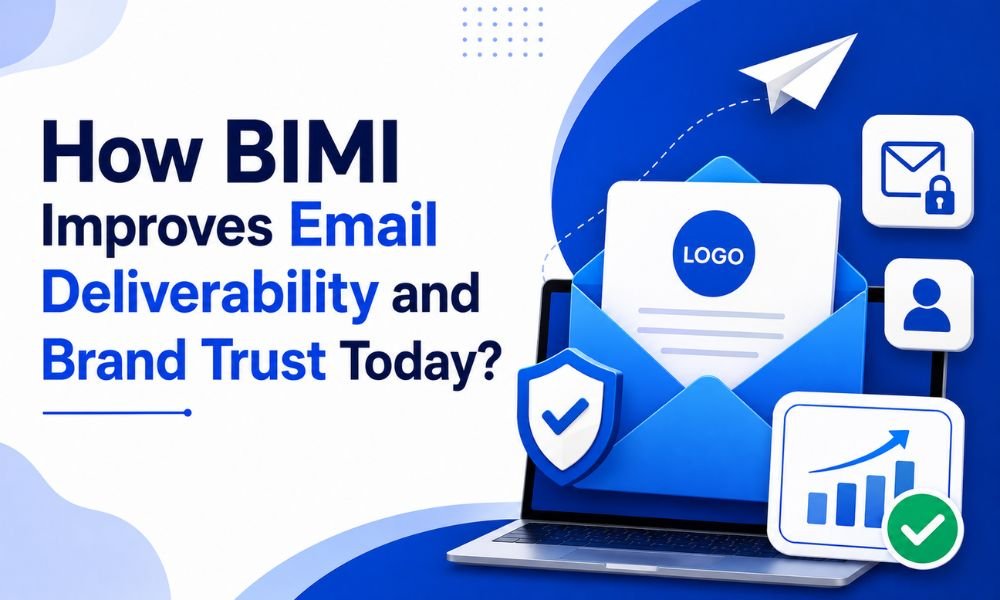
BIMI allows an eligible brand to display its logo alongside authenticated email messages in supported email clients. More importantly, BIMI works as part of a broader email authentication strategy involving SPF, DKIM, and DMARC. It can therefore connect technical email security with a visible brand identity.
But there is an important distinction: BIMI itself is not a magic deliverability booster. It does not guarantee inbox placement or prevent messages from reaching spam. Instead, it can strengthen the authentication and trust ecosystem around a brand while giving recipients a recognizable visual signal.
What Is BIMI?
BIMI stands for Brand Indicators for Message Identification. It is an email standard designed to let organizations associate an approved brand logo with authenticated messages.
The basic concept is straightforward:
Email authentication → Domain protection → Brand identity → Greater recipient confidence
Before implementing BIMI, businesses generally need a properly configured email authentication framework, particularly DMARC. BIMI then adds a visible brand layer to that foundation.
For businesses sending newsletters, transactional messages, promotional campaigns, or customer communications at scale, this can make the inbox experience more recognizable and professional.
How Does BIMI Work?
BIMI does not replace SPF, DKIM, or DMARC. Instead, it works alongside them.
A simplified implementation process looks like this:
- Configure SPF to identify authorized sending sources.
- Configure DKIM so outgoing messages can be cryptographically authenticated.
- Implement DMARC and establish an appropriate enforcement policy.
- Prepare a BIMI-compatible brand logo according to the required specifications.
- Host the logo securely and publish the appropriate BIMI DNS record.
- Use a certificate where required by the participating mailbox provider.
- Test the setup across supported email environments.
The exact requirements can vary by mailbox provider, so businesses should verify current provider-specific requirements before implementation.
For businesses reviewing their email infrastructure, understanding the difference between SMTP vs Email API for Businesses can also help when deciding how different types of email should be sent.
Does BIMI Directly Improve Email Deliverability?
This is one of the most important questions for marketers.
BIMI should not be treated as a direct inbox-placement guarantee.
Email deliverability depends on many factors, including:
- Sender and domain reputation
- SPF, DKIM, and DMARC authentication
- Recipient engagement
- Bounce rates
- Spam complaints
- Sending practices
- List quality
- Message content
- Infrastructure and sending patterns
BIMI primarily adds a brand-identity layer to an authenticated email ecosystem.
However, its indirect value can still be significant. A recognizable logo may help recipients identify legitimate communications more easily. Stronger recognition can contribute to confidence and engagement, while DMARC enforcement helps protect the domain against unauthorized use.
For businesses managing high-volume email, BIMI should therefore be viewed as one component of a broader email deliverability and domain-protection strategy, rather than a standalone solution.
If your business is experiencing inbox-placement problems, it is also useful to understand the common causes of emails going to spam and how different deliverability factors can affect campaigns.
How BIMI Builds Brand Trust
Trust is especially important when customers receive an email asking them to click a link, make a payment, update an account, or review sensitive information.
A familiar brand logo provides an immediate visual cue.
For example, imagine a customer receives two messages:
Email A:
A generic sender name with no recognizable visual identity.
Email B:
A properly authenticated message displaying a familiar company logo.
The second message may be easier for the customer to recognize as belonging to the expected organization.
This doesn’t mean a logo alone makes an email safe. Recipients should still check the sender address, links, message context, and other security indicators. Nevertheless, recognizable branding can reduce uncertainty and create a more consistent customer experience.
BIMI can support trust by:
- Making legitimate brand communications easier to recognize
- Connecting brand identity with email authentication
- Helping organizations establish a consistent inbox presence
- Supporting anti-phishing and anti-spoofing strategies
- Reinforcing brand recognition across recurring communications
- Providing an additional visible signal alongside existing security controls
BIMI and Phishing Protection
Phishing attacks often depend on impersonating trusted companies.
Attackers may copy a company’s logo, email design, and messaging style to make fraudulent communications appear legitimate. Email authentication technologies help organizations protect their domains from unauthorized use.
BIMI strengthens this ecosystem by associating a brand’s visual identity with authenticated email.
However, it is important not to overstate its role. BIMI does not independently stop phishing attacks. SPF, DKIM, DMARC, secure domain practices, employee awareness, and recipient education remain important.
Think of BIMI as a visible trust layer built on top of a stronger authentication foundation.
BIMI and Customer Experience
Brand consistency matters across every customer touchpoint.
A customer may recognize a business from its website, social media profiles, advertisements, packaging, and mobile application. Email is another important touchpoint.
When a supported mailbox environment displays the organization’s recognizable brand identity, email can become more visually consistent with those other experiences.
This can be particularly useful for:
- Ecommerce companies
- SaaS businesses
- Financial and professional services
- Online retailers
- Subscription businesses
- Large enterprises
- Organizations sending frequent customer communications
The value is not simply aesthetic. A consistent identity can make communications easier to distinguish in a busy inbox.
What Businesses Need Before Implementing BIMI
BIMI should not be the first email-security project for a company with weak authentication.
Before investing time in BIMI, review:
1. SPF
Make sure your authorized email-sending services are correctly represented in your SPF configuration.
2. DKIM
Ensure outgoing messages are signed correctly and that your sending platforms are configured consistently.
3. DMARC
DMARC is particularly important because BIMI relies on an authenticated domain environment and appropriate DMARC enforcement.
4. Domain Reputation
Authentication does not automatically create a good sender reputation. Businesses should continue monitoring bounces, complaints, engagement, and sending behavior.
5. Email List Quality
Avoid sending campaigns to outdated, purchased, or unverified lists. Poor recipient quality can damage campaign performance and sender reputation regardless of BIMI.
Maintaining a clean recipient database is therefore important. Businesses dealing with invalid or risky addresses can also review email verification and list-quality practices as part of a broader deliverability strategy.
Common BIMI Mistakes to Avoid
Businesses should avoid treating BIMI as a shortcut to better deliverability.
Common mistakes include:
- Assuming BIMI guarantees inbox placement
- Implementing BIMI without properly configuring DMARC
- Ignoring SPF or DKIM problems
- Using an incorrect or unsuitable logo format
- Focusing on branding while neglecting sender reputation
- Sending to poor-quality email lists
- Assuming every mailbox provider displays BIMI identically
- Making unsupported claims about improved open rates or revenue
A good implementation starts with authentication and deliverability fundamentals, then adds BIMI as an additional brand and trust layer.
Is BIMI Worth It for Businesses?
For organizations that depend heavily on email, BIMI can be a worthwhile investment, particularly when brand recognition, domain protection, and customer trust are priorities.
It is most valuable when combined with a mature email program that already pays attention to authentication, list hygiene, content quality, engagement, and sender reputation.
The strongest approach is not:
“Install BIMI and get better deliverability.”
Instead, think:
“Build a secure email authentication foundation, protect the sending domain, maintain a healthy reputation, and use BIMI to strengthen recognizable brand identity.”
Final Takeaway
BIMI represents an important evolution in business email because it connects email authentication with visible brand identity.
It can help recipients recognize legitimate communications while supporting a broader strategy built around SPF, DKIM, and DMARC. However, BIMI should never be presented as a guaranteed method for getting emails into the inbox.
For the best results, businesses should approach email deliverability holistically: authenticate the domain, maintain a clean mailing list, monitor sender reputation, create relevant content, control sending practices, and then use BIMI where appropriate.
In short, BIMI doesn’t replace good email deliverability practices—it complements them. When technical authentication and recognizable branding work together, businesses can create a more trustworthy and professional email experience for their customers.