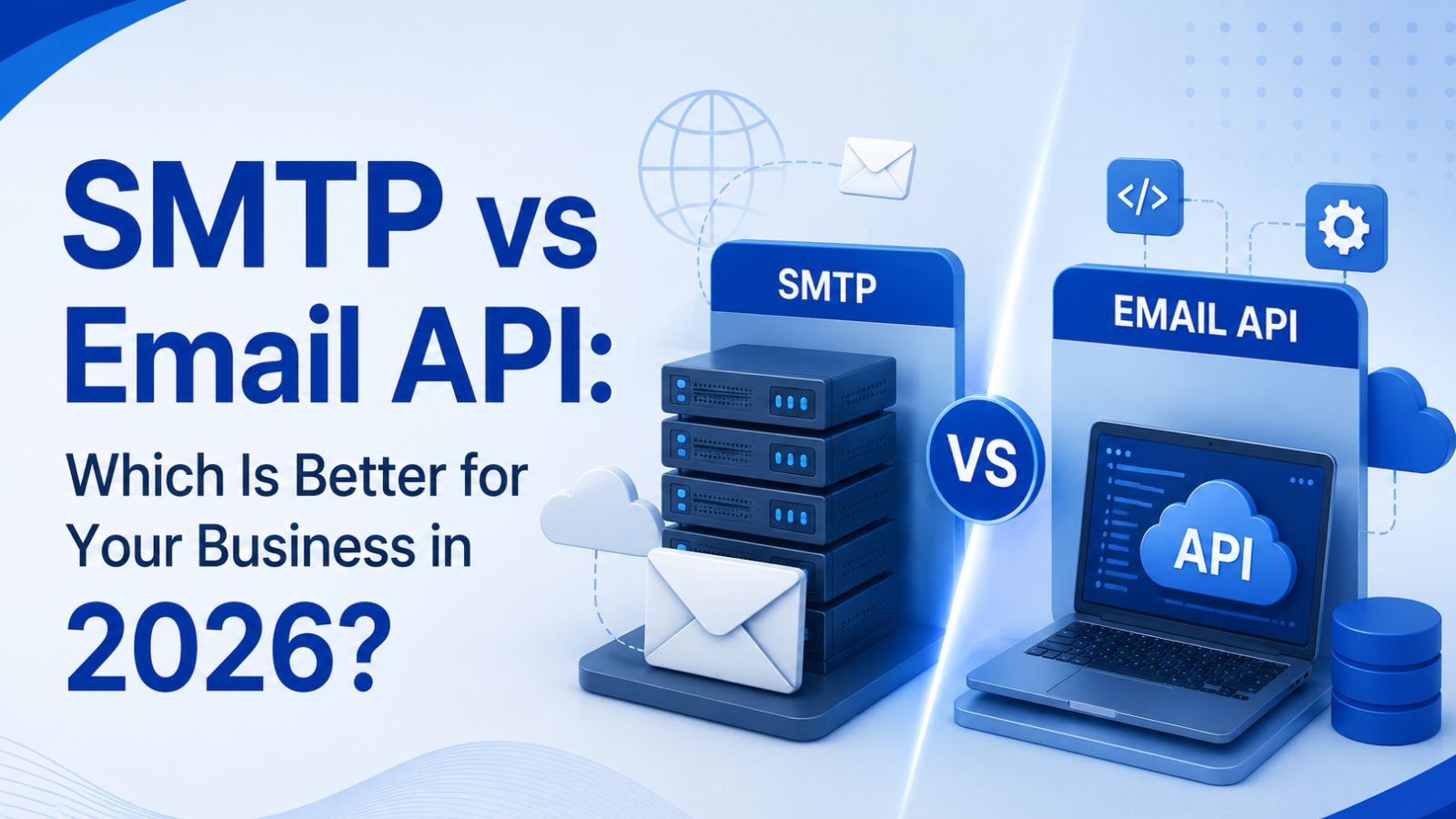
Choosing the right email delivery method can directly affect your application’s performance, email deliverability, and user experience. Whether you’re sending password reset emails, order confirmations, newsletters, or marketing campaigns, you’ll likely come across two popular options: SMTP and Email APIs.
While both are designed to send emails, they work differently and serve different business needs. Understanding their strengths and limitations will help you make the right decision for your website, SaaS platform, eCommerce store, or enterprise application.
In this guide, we’ll explain the differences between SMTP and Email APIs, compare their features, discuss ideal use cases, and help you determine which solution best fits your business in 2026.
What Is SMTP?
SMTP (Simple Mail Transfer Protocol) is the industry-standard protocol used to send emails across the internet. It has powered email communication for decades and remains the backbone of most business email systems.
SMTP works by connecting your website, application, CRM, or email client to a mail server, which then delivers messages to recipients’ inboxes.
Businesses commonly use SMTP for:
- Transactional emails
- Contact form notifications
- Password reset emails
- Order confirmations
- Invoice delivery
- Internal business communications
Because SMTP is supported by almost every programming language, CMS, and email client, it remains one of the easiest and most compatible ways to send emails.
What Is an Email API?
An Email API allows applications to send emails using HTTP requests instead of the traditional SMTP protocol.
Developers integrate the API directly into applications, giving them greater control over email delivery, personalization, analytics, and automation.
Email APIs are commonly used by:
- SaaS platforms
- Mobile applications
- CRM software
- Marketing automation tools
- Enterprise software
- Custom business applications
Most modern email service providers offer both SMTP and API options.
SMTP vs Email API: Key Differences
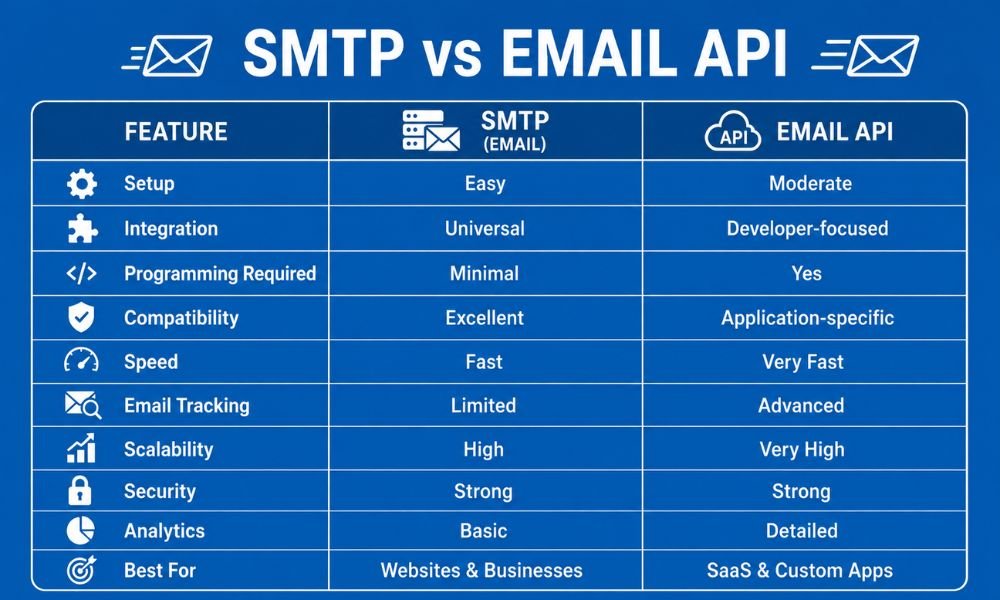
Both options are reliable, but the best choice depends on your business goals and technical requirements.
Advantages of SMTP
SMTP remains the preferred choice for many organizations because of its simplicity and broad compatibility.
Easy Implementation
Most CMS platforms, including WordPress, Magento, Shopify, and Joomla, support SMTP with minimal configuration.
Universal Compatibility
Almost every website, application, ERP, CRM, and email client can connect using SMTP credentials.
Reliable Transactional Email
SMTP is highly effective for sending critical business emails such as:
- OTP verification
- Password resets
- Purchase receipts
- Shipping updates
- Appointment confirmations
Lower Learning Curve
Businesses without dedicated development teams can implement SMTP quickly without extensive coding knowledge.
Advantages of Email APIs
Email APIs offer greater flexibility for organizations building modern applications.
Faster Application Integration
Developers can trigger emails directly from application events using RESTful API requests.
Rich Analytics
Most Email APIs provide detailed insights, including:
- Delivery status
- Opens
- Click-through rates
- Bounce reports
- Spam complaints
Advanced Personalization
APIs make it easier to send dynamic emails with personalized content, attachments, variables, and templates.
Better Automation
Email APIs integrate seamlessly with modern workflows, automation platforms, and cloud applications.
Which Option Is Better for Different Businesses?
Small Businesses
SMTP is usually the most practical choice because it is easy to configure, cost-effective, and compatible with common website platforms.
eCommerce Stores
Online stores benefit from SMTP for transactional emails such as order confirmations, shipping updates, and payment receipts. As order volumes grow, businesses may combine SMTP with API-based automation for advanced workflows.
SaaS Companies
Software providers often prefer Email APIs because they integrate directly into applications and support advanced personalization, analytics, and automation.
Enterprise Organizations
Large enterprises frequently use both technologies. SMTP handles business communications, while APIs power application-generated emails and large-scale customer engagement.
Security Considerations
Whether you choose SMTP or an Email API, email security should never be overlooked.
Best practices include:
- Enable TLS encryption
- Configure SPF records
- Publish DKIM signatures
- Implement DMARC policies
- Monitor sending reputation
- Rotate credentials regularly
These measures improve email authentication, reduce spoofing risks, and increase inbox placement.
Deliverability Matters More Than the Protocol
Many businesses assume switching from SMTP to an Email API automatically improves deliverability. In reality, inbox placement depends on factors such as sender reputation, authentication, list quality, content, and infrastructure.
Using a professionally managed Business SMTP relay server can significantly improve email reliability by providing authenticated delivery, optimized routing, IP reputation management, and continuous monitoring. This helps ensure that important transactional emails consistently reach recipients instead of landing in spam folders.
When Should You Choose SMTP?
SMTP is an excellent choice if you:
- Run a WordPress website
- Own an online store
- Send transactional emails
- Need quick deployment
- Want broad software compatibility
- Prefer a straightforward setup
SMTP continues to be one of the most dependable solutions for businesses that value simplicity and reliability.
When Should You Choose an Email API?
An Email API is often the better option if you:
- Build custom software
- Operate a SaaS platform
- Need real-time analytics
- Require advanced automation
- Send highly personalized emails
- Have development resources available
APIs provide greater flexibility for applications where email is tightly integrated into the user experience.
Can You Use Both Together?
Absolutely.
Many successful businesses combine SMTP and Email APIs to get the best of both worlds.
For example:
- SMTP handles contact forms and transactional notifications.
- Email APIs power application workflows, onboarding sequences, and marketing automation.
This hybrid approach allows businesses to optimize reliability while taking advantage of modern development capabilities.
Frequently Asked Questions
Is SMTP outdated?
No. SMTP remains the global standard for sending emails and continues to power millions of websites and business applications worldwide.
Which is easier to implement?
SMTP is generally easier because most websites and applications support it without custom development.
Is an Email API faster?
In many application environments, Email APIs can offer lower overhead and richer functionality, but for most businesses, the difference in sending speed is less important than overall deliverability and infrastructure quality.
Which is more secure?
Both can be secure when configured correctly using encryption, authentication, and modern email security standards.
Final Thoughts
Choosing between SMTP and an Email API isn’t about finding a universally better solution—it’s about selecting the right tool for your business.
SMTP remains the preferred option for businesses seeking dependable, easy-to-manage email delivery across websites and common applications. Email APIs excel when deep application integration, automation, and advanced analytics are priorities.
Before deciding, evaluate your technical resources, expected email volume, scalability requirements, and long-term business goals. A reliable email infrastructure, proper authentication, and a strong sender reputation will have a greater impact on deliverability than the protocol alone.
By understanding the strengths of both SMTP and Email APIs, you can build an email strategy that supports growth, improves customer communication, and keeps critical messages reaching the inbox.