Email marketing becomes much more effective when subscribers receive messages that actually match their interests, behavior, and stage in the customer journey. Sending the same campaign to everyone may seem convenient, but it can lead to lower engagement, more unsubscribes, and weaker deliverability over time.
This is where email list segmentation makes a difference.
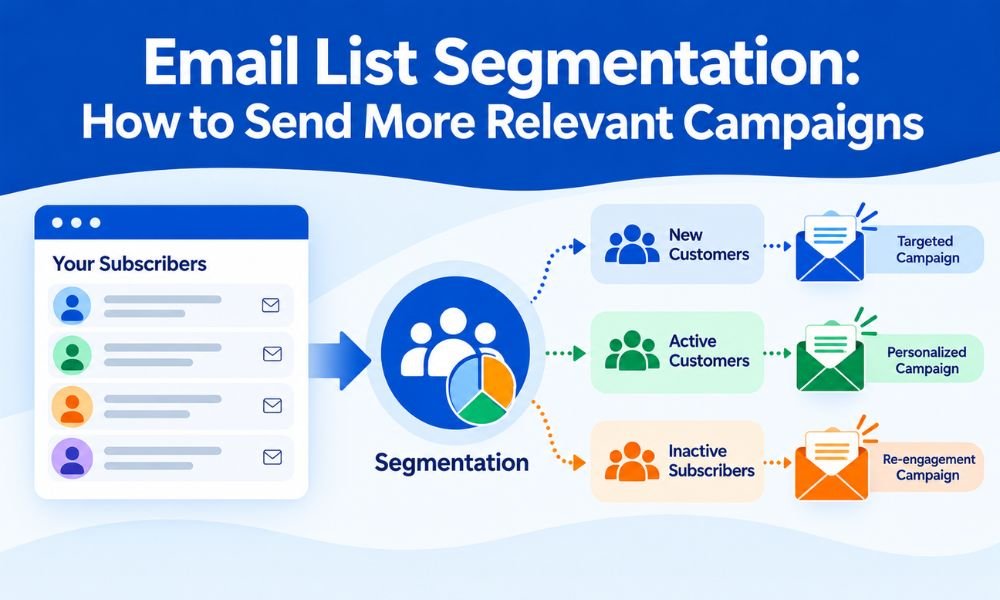
Email segmentation is the process of dividing your subscriber list into smaller groups based on shared characteristics, actions, preferences, or customer behavior. Instead of sending one generic message to your entire database, you can create more relevant campaigns for specific audiences.
For businesses using email marketing to generate leads, nurture prospects, or increase sales, effective segmentation can make every campaign more targeted and useful.
What Is Email List Segmentation?
Email list segmentation means organizing subscribers into groups according to information that helps you understand what type of communication they are most likely to value.
For example, an online store might create separate segments for:
- New customers
- Repeat customers
- Customers who have not purchased recently
- Subscribers interested in a particular product category
- Customers who abandoned their shopping cart
- Highly engaged subscribers
- Inactive subscribers
A B2B company could segment its database by job role, company size, industry, location, lead source, or buying stage.
The goal is simple: send the right message to the right audience at the right time.
Why Is Email Segmentation Important?
Your subscribers are not all at the same stage of the customer journey. Some may have just joined your mailing list, while others may already be loyal customers.
Treating both groups identically can make your campaigns less relevant.
Segmentation allows marketers to create content based on actual subscriber needs. For example, a new subscriber may benefit from an introductory email or educational guide, while an existing customer might be more interested in a product upgrade or loyalty offer.
Better relevance can improve important email marketing metrics such as:
- Open rates
- Click-through rates
- Conversion rates
- Customer engagement
- Revenue per campaign
- Unsubscribe rates
Segmentation can also support better email deliverability because your campaigns are more likely to generate positive engagement instead of being repeatedly ignored or marked as unwanted.
For a broader understanding of how sender behavior and domain health affect inbox placement, businesses should also pay attention to their email sender reputation.
7 Effective Ways to Segment an Email List
1. Segment by Customer Demographics
Basic demographic information can be useful when it directly influences the relevance of your offer.
Depending on your business, you could segment subscribers by:
- Age group
- Location
- Language
- Industry
- Job role
- Company size
For example, a local service provider could create different campaigns for customers in Delhi, Mumbai, Bangalore, or other service areas.
However, avoid collecting unnecessary personal information simply because it is available. Every data point should have a clear marketing purpose and should be handled responsibly.
2. Segment Based on Purchase History
Purchase behavior is one of the most valuable segmentation signals for e-commerce businesses.
Consider creating groups based on:
- Products purchased
- Number of purchases
- Average order value
- First purchase date
- Most recent purchase
- Frequently purchased categories
Someone who purchased a laptop may be interested in accessories, extended warranties, or related products. A customer who repeatedly purchases the same product may respond well to replenishment reminders.
This creates opportunities for relevant cross-selling and upselling without making every subscriber see the same promotion.
3. Segment by Email Engagement
Not every subscriber interacts with your emails in the same way.
You can create segments such as:
- Highly engaged subscribers
- Occasionally engaged subscribers
- Subscribers who have not opened recent emails
- Subscribers who click but rarely purchase
- Long-term inactive subscribers
Highly engaged subscribers may be suitable for new product announcements or special offers.
Inactive subscribers, on the other hand, may benefit from a carefully planned re-engagement campaign instead of receiving every regular promotional email.
4. Segment by Website Behavior
Your website can provide useful signals about subscriber interests.
For example, someone who repeatedly visits a particular service page or product category may be interested in receiving relevant educational content or offers.
Behavioral segmentation can include actions such as:
- Visiting a product page
- Downloading an ebook
- Registering for a webinar
- Starting checkout
- Viewing pricing information
- Completing a contact form
The more accurately you understand these behaviors, the easier it becomes to create useful follow-up campaigns.
5. Segment by Lead Source
Knowing where a subscriber came from can help you understand their original intent.
Your list might contain people who joined through:
- Google search
- Social media
- Paid advertising
- Website forms
- Webinars
- Lead magnets
- Referral campaigns
A person who downloaded an SMTP guide, for example, may need educational information before becoming a customer. Someone who requested a pricing quote may be much closer to making a purchase.
Matching the campaign to the original intent can make your nurturing process more effective.
6. Segment by Customer Lifecycle Stage
A subscriber’s position in the customer journey should influence the message they receive.
Common lifecycle segments include:
New subscriber: Introduce your brand and provide useful resources.
Marketing-qualified lead: Share educational content, case studies, comparisons, or product information.
New customer: Provide onboarding information and helpful next steps.
Existing customer: Recommend relevant products, services, or upgrades.
Inactive customer: Use re-engagement campaigns to understand whether they still want to hear from you.
This approach prevents your email strategy from becoming overly promotional.
7. Segment by Stated Preferences
One of the most reliable ways to understand subscriber interests is to simply ask.
Preference centers can allow subscribers to choose:
- Topics they want to receive
- Email frequency
- Product categories
- Promotional versus educational content
- Preferred communication preferences
When subscribers actively tell you what they want, you can use that information to build more meaningful campaigns.
How to Create a Successful Segmentation Strategy
Effective segmentation does not require dozens of complicated lists.
Start with the segments that can make a measurable difference to your business. Identify your primary customer groups, determine what information you already have, and decide which subscriber behaviors are meaningful.
A practical process is:
- Define your campaign objective.
- Identify the audience most likely to respond.
- Select relevant segmentation criteria.
- Create personalized campaign content.
- Test the campaign.
- Measure engagement and conversions.
- Refine the segment based on results.
Avoid creating segments simply for the sake of personalization. If a segment is too small or the available data is unreliable, it may add unnecessary complexity.
Segmentation and Email Deliverability
Relevance and deliverability are closely connected.
When subscribers consistently engage with useful emails, your campaigns can generate healthier engagement signals. On the other hand, repeatedly sending irrelevant campaigns to inactive or uninterested users can result in poor engagement and potentially more complaints or unsubscribes.
Segmentation should therefore work alongside good email hygiene practices.
Regularly remove invalid addresses, monitor bounce rates, respect unsubscribe requests, authenticate your sending domain, and avoid sending promotional content to subscribers who have not provided appropriate permission.
Businesses can also use email verification to identify problematic addresses before sending campaigns. This is particularly useful when lists have been collected over a long period or originate from multiple sources.
Final Thoughts
Email list segmentation is not simply a personalization tactic. It is a way to make your email marketing strategy more customer-focused.
By separating subscribers according to demographics, purchase history, engagement, website behavior, lead source, lifecycle stage, and preferences, you can create campaigns that are more relevant to the people receiving them.
The best segmentation strategy is not necessarily the most complicated one. Start with meaningful data, understand your audience, test your campaigns, and continuously improve your segments based on real performance.
When relevance becomes the foundation of your email strategy, your subscribers are more likely to see your messages as useful rather than intrusive—and that can support stronger engagement, better customer relationships, and more sustainable email marketing results.