Bulk email can be a powerful way for businesses to reach customers, nurture leads, share product updates, and drive repeat sales. However, sending thousands of emails is not simply a matter of pressing “send.” The infrastructure behind your campaigns plays a major role in delivery speed, sender reputation, reliability, and inbox placement.
This is where a dedicated SMTP server for bulk mailing becomes important. Unlike shared SMTP infrastructure, a dedicated server gives a business greater control over its sending environment and reputation. But is it the right choice for every business? Let’s understand how dedicated SMTP works, its benefits, setup requirements, and the best practices that help businesses send bulk emails responsibly.
What Is a Dedicated SMTP Server?
SMTP, or Simple Mail Transfer Protocol, is the standard technology used to send emails between mail servers. A dedicated SMTP server is an email-sending server allocated specifically to one business, organization, or sending operation rather than being shared among many unrelated customers.
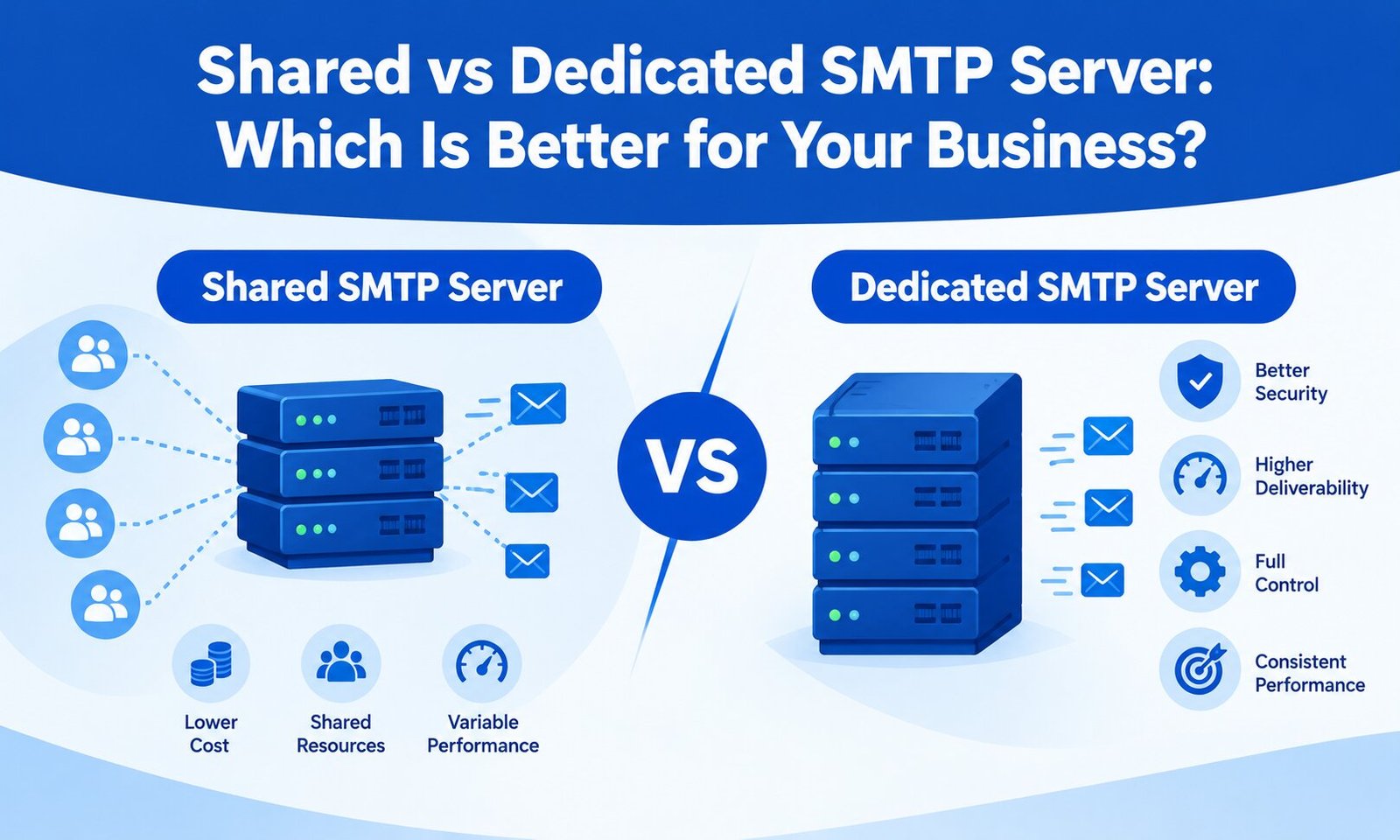
With shared SMTP infrastructure, the reputation of other senders can potentially affect the overall sending environment. A dedicated setup gives you more control over factors such as sending volume, authentication, IP reputation, bounce management, and server configuration.
However, having a dedicated IP does not automatically guarantee inbox placement. Internet service providers and mailbox providers evaluate multiple signals, including authentication, recipient engagement, complaint rates, sending patterns, and domain reputation.
Why Use a Dedicated SMTP Server for Bulk Mailing?
1. Greater Control Over Sender Reputation
One of the biggest advantages of dedicated SMTP infrastructure is control. When you use a dedicated sending IP, your reputation is primarily influenced by your own email practices rather than the activities of unrelated senders using the same infrastructure.
This can be particularly valuable for businesses that send large volumes of legitimate, permission-based email consistently.
2. Better Scalability
Growing businesses may eventually outgrow basic SMTP accounts or shared sending limits. A dedicated SMTP environment can provide greater flexibility for handling larger campaigns, provided the server and IP reputation are managed correctly.
Before increasing volume significantly, businesses should gradually establish a predictable sending pattern rather than suddenly sending hundreds of thousands of emails.
3. Improved Monitoring and Troubleshooting
Dedicated infrastructure can make it easier to monitor delivery performance. You can track important metrics such as:
- Delivery and bounce rates
- SMTP response codes
- Deferrals and rejected messages
- Spam complaints
- Sending volume
- IP and domain reputation
- Authentication results
These insights help identify problems before they become serious deliverability issues.
4. More Configuration Flexibility
Businesses with technical resources can configure their SMTP environment around their specific requirements. Depending on the setup, this can include authentication, encryption, DNS records, rate limits, queue management, logging, and bounce processing.
This level of control can be especially useful for companies with dedicated technical or email marketing teams.
Dedicated SMTP vs. Shared SMTP
The choice between dedicated and shared SMTP depends on your sending volume, technical capabilities, budget, and deliverability requirements.
A shared SMTP service may be suitable for smaller businesses that have modest sending requirements and prefer a managed solution. It can reduce infrastructure management and simplify the initial setup.
A dedicated SMTP server may make more sense when a company needs greater control over sending infrastructure, manages substantial volumes, or wants to build a sending reputation around its own IP.
However, dedicated infrastructure also creates responsibility. If a business sends unwanted email, maintains poor list hygiene, generates excessive complaints, or ignores authentication requirements, a dedicated IP can develop a poor reputation.
For a deeper comparison of infrastructure considerations, businesses can review this guide on choosing the right SMTP server for bulk email campaigns.
What You Need Before Sending Bulk Email
A dedicated SMTP server should not be treated as a standalone solution. Several technical and operational components are essential for reliable email delivery.
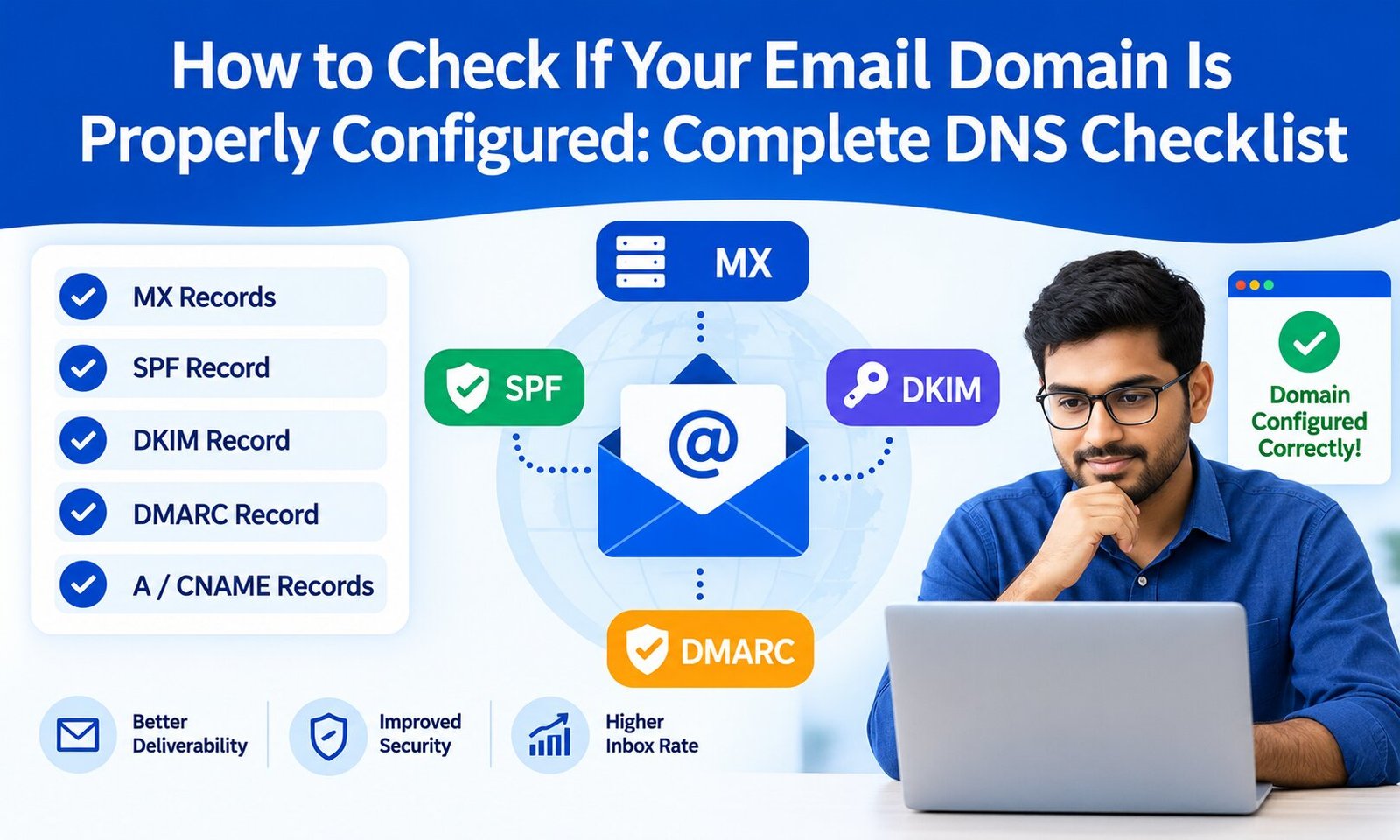
SPF, DKIM, and DMARC
Email authentication is fundamental to modern email delivery.
SPF (Sender Policy Framework) identifies which servers are authorized to send email for your domain.
DKIM (DomainKeys Identified Mail) adds a cryptographic signature that helps receiving servers verify that an email was authorized by the sending domain and has not been altered.
DMARC (Domain-based Message Authentication, Reporting, and Conformance) builds on SPF and DKIM and provides policies and reporting mechanisms that help domain owners protect their identity and improve authentication alignment.
Correctly configuring these records should be a priority before launching significant bulk campaigns.
Reverse DNS and Server Identity
A professional SMTP environment should have appropriate reverse DNS, also known as a PTR record, associated with the sending IP. The server hostname, forward DNS, and reverse DNS configuration should be consistent and professionally maintained.
Mailbox providers use technical signals like these as part of their broader assessment of incoming email.
TLS Encryption
SMTP connections should use appropriate encryption where supported. TLS helps protect email transmission between systems and is an important part of maintaining a secure email-sending environment.
Clean and Permission-Based Email Lists
Technical infrastructure cannot compensate for poor-quality recipient data.
Sending to purchased, scraped, outdated, or unverified lists can lead to high bounce rates, complaints, and reputation problems. A healthier approach is to send to recipients who have legitimately opted in and to remove invalid or consistently inactive addresses.
Businesses should also consider implementing email verification before large campaigns. Good list hygiene reduces avoidable delivery failures and helps maintain a healthier sender reputation.
Why Email Warm-Up Matters
A new dedicated IP should not immediately be used for extremely high-volume sending. Mailbox providers need time to observe the sending behavior and determine whether the traffic appears trustworthy.
A warm-up process involves gradually increasing sending volume while monitoring delivery results and recipient engagement.
For example, instead of moving immediately from zero to hundreds of thousands of emails per day, a business can establish a consistent sending pattern and increase volume progressively according to its audience, infrastructure, and performance.
You can learn more about this process in our guide to warming up new email domains without hurting deliverability.
Monitor Bounce Rates and Engagement
After your dedicated SMTP server goes live, monitoring should become an ongoing activity rather than a one-time task.
Pay close attention to hard bounces, soft bounces, spam complaints, deferrals, blocks, and engagement trends. A sudden increase in bounces or complaints can indicate problems with list quality, targeting, authentication, content, or sending practices.
It is also important to process bounce notifications promptly. Repeatedly attempting to send to permanently invalid addresses can damage the quality of your sending program.
Is a Dedicated SMTP Server Right for Your Business?
A dedicated SMTP server can be a strong option for businesses that need higher sending control, scalable infrastructure, and greater visibility into email delivery. It can be particularly useful for organizations running consistent, permission-based bulk email programs.
However, businesses should not choose dedicated SMTP simply because they believe it will “bypass spam filters.” Deliverability depends on the entire sending ecosystem: domain reputation, IP reputation, authentication, list quality, content, recipient engagement, complaint rates, and responsible sending behavior.
If your email volume is relatively small, a managed SMTP provider may be easier and more cost-effective. If your business has substantial sending requirements and the technical expertise to manage infrastructure responsibly, dedicated SMTP can provide considerably more control.
Final Thoughts
A dedicated SMTP server for bulk mailing is best viewed as email infrastructure—not a shortcut to the inbox. Its real value comes from combining reliable server configuration with strong authentication, responsible list management, gradual volume growth, bounce processing, and continuous reputation monitoring.
For businesses serious about long-term email marketing, the goal should not simply be to send more messages. The goal should be to deliver relevant messages consistently to people who want to receive them.
When dedicated SMTP infrastructure is managed with that principle in mind, it can provide the control, scalability, and visibility needed to build a dependable bulk email operation.