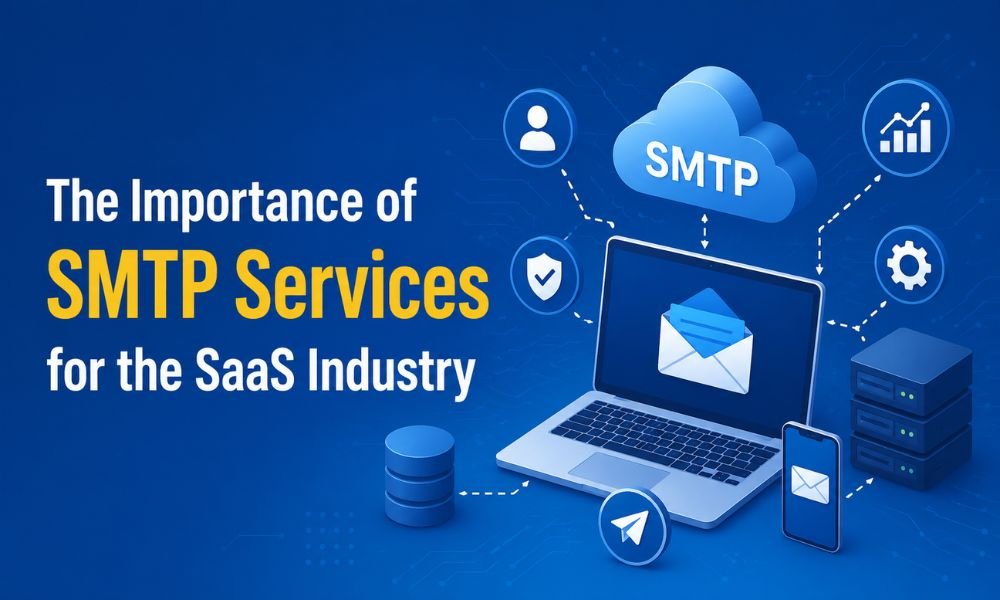
For SaaS businesses, email is much more than a communication channel. It is part of the product experience. From account verification and password resets to invoices, alerts, onboarding messages, product updates, and marketing campaigns, SaaS platforms depend on email to keep customers informed and engaged.
This is where SMTP services play an important role. A reliable SMTP (Simple Mail Transfer Protocol) service provides the infrastructure required to send application and business emails efficiently while helping SaaS companies improve delivery reliability, scalability, security, and sender reputation.
What Is SMTP and Why Does SaaS Need It?
SMTP is the standard protocol used to send email between mail servers and email systems. When a SaaS application sends an automated message, an SMTP server helps transfer that message from the application to the recipient’s email provider.
For example, when a customer creates an account on a SaaS platform, the system may immediately send a verification email. The same platform might later send a password-reset link, payment receipt, subscription reminder, or service notification. These emails need to reach users quickly and consistently.
Using a professional SMTP service gives SaaS companies greater control over this process than relying solely on ordinary mailbox services.
1. Reliable Delivery of Transactional Emails
Transactional emails are critical to SaaS operations. Unlike promotional emails, they are usually triggered by specific customer actions or account events.
Common examples include:
- Account verification emails
- Password-reset notifications
- Login and security alerts
- Subscription confirmations
- Payment receipts
- Trial expiration reminders
- Product notifications
- Support ticket updates
- Usage and billing alerts
If these messages fail to arrive, the customer experience can suffer immediately. A reliable SMTP infrastructure is therefore essential for ensuring important messages are processed and delivered efficiently.
For SaaS companies, email delivery should be considered part of the overall application infrastructure rather than an afterthought.
2. Better Email Deliverability
Sending an email does not guarantee that it will reach the inbox. Internet service providers and mailbox providers evaluate numerous signals when deciding whether an email should reach the inbox, spam folder, or be rejected.
SMTP services can provide tools and infrastructure that help businesses manage sender reputation, authentication, bounce handling, and delivery performance.
SaaS companies should properly configure email authentication technologies such as SPF, DKIM, and DMARC. They should also monitor bounce rates, complaints, engagement, and other delivery indicators.
Maintaining a clean recipient database is equally important. Sending repeatedly to invalid or inactive addresses can negatively affect sender reputation.
3. Scalability as Your SaaS Business Grows
A SaaS platform may begin by sending a few hundred emails per day. As its user base expands, that number can quickly become thousands or millions of messages.
A scalable SMTP infrastructure allows businesses to handle increasing email volumes without redesigning their entire communication system.
For example, a growing SaaS platform might need to simultaneously deliver:
- New-user onboarding emails
- Automated product notifications
- Billing messages
- Password resets
- Marketing campaigns
- Customer lifecycle emails
A capable SMTP provider can help manage these volumes while offering sending controls, monitoring, queue management, and infrastructure designed for higher throughput.
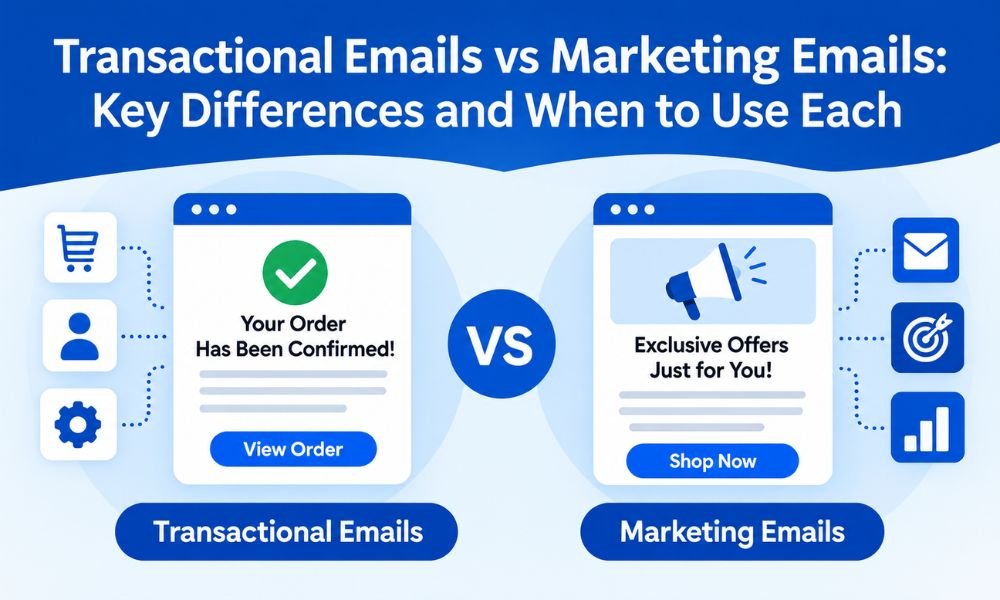
4. SMTP Helps Separate Transactional and Marketing Email
SaaS businesses often send different types of messages from the same application. Mixing transactional and marketing traffic without an appropriate strategy can create unnecessary deliverability risks.
For instance, a large marketing campaign generating complaints could potentially affect the reputation associated with important transactional communications.
Businesses can use appropriate SMTP infrastructure and sending domains or subdomains to separate email streams where necessary. This approach helps SaaS teams manage different communication categories more strategically.
Companies evaluating the technical differences between SMTP infrastructure and modern application-based sending can also explore this useful guide on SMTP vs. Email API for businesses to understand which approach better fits their requirements.
5. Improved Security and Authentication
Security is especially important for SaaS businesses because email frequently contains sensitive account information, login links, invoices, and customer notifications.
A professional email infrastructure should support appropriate authentication and security practices. SaaS companies should configure SPF, DKIM, and DMARC correctly and use secure SMTP connections whenever supported.
Strong authentication helps mailbox providers verify that messages are legitimately associated with the sending domain. It can also reduce opportunities for attackers to impersonate the brand.
Security should also extend beyond the SMTP server. SaaS companies should protect API keys, SMTP credentials, user information, and application-level email configurations.
6. Email Analytics and Monitoring
One major advantage of professional SMTP infrastructure is visibility.
SaaS teams need to know whether their emails are being delivered successfully. Useful metrics can include:
- Delivery rate
- Bounce rate
- Hard and soft bounces
- Spam complaints
- Opens and clicks, where applicable
- Rejection rates
- Sending volume
- Delivery errors
Monitoring these metrics helps technical and marketing teams identify problems before they become widespread.
For example, a sudden increase in hard bounces may indicate outdated customer data, while a rise in rejection rates could point toward authentication, reputation, or configuration problems.
7. Dedicated SMTP Infrastructure Can Offer Greater Control
For SaaS businesses with substantial email volumes or specialized requirements, dedicated SMTP infrastructure may provide additional control over sending configuration and reputation management.
A dedicated SMTP server can be useful when a company needs greater ownership of its email environment, customized configurations, or more control over sending behavior.
However, dedicated infrastructure is not automatically better for every SaaS company. It requires technical expertise, monitoring, authentication configuration, reputation management, maintenance, and proper IP/domain warming.
Businesses considering this approach can learn more about the benefits of a dedicated SMTP server for bulk mailing before deciding whether dedicated infrastructure is appropriate for their email strategy.
8. SMTP Supports Customer Experience and Retention
Email reliability can directly influence how customers perceive a SaaS product.
Imagine signing up for software but never receiving the verification email. Or imagine requesting a password reset and waiting indefinitely for the link. Even if the SaaS application itself works perfectly, unreliable email can make the product feel broken.
Fast and dependable transactional email creates a smoother customer journey. It helps users complete onboarding, recover accounts, understand billing activity, and receive important product information at the right time.
In this way, SMTP infrastructure supports not only technical operations but also customer satisfaction and retention.
How Should SaaS Companies Choose an SMTP Service?
The cheapest SMTP option is not necessarily the best choice. SaaS businesses should evaluate providers based on their actual requirements.
Important factors include:
- Deliverability: Look for infrastructure and tools designed to support consistent inbox delivery.
- Scalability: Ensure the provider can accommodate future growth.
- Authentication: Check support for SPF, DKIM, and DMARC.
- Analytics: Look for useful delivery and bounce reporting.
- Security: Protect credentials and use secure transmission methods.
- Support: Reliable technical support can be valuable when delivery problems occur.
- Integration: Confirm compatibility with your SaaS technology stack.
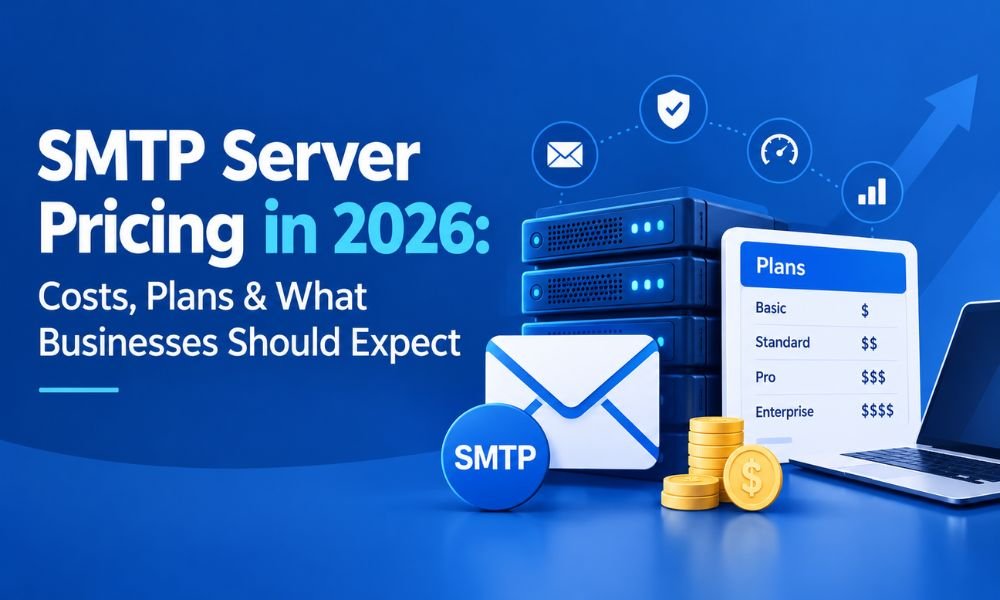
- Pricing: Compare costs based on actual monthly email volume and future requirements.
- Reputation management: Understand how IPs, domains, bounces, and complaints are handled.
- Compliance: Make sure your email practices follow applicable privacy and messaging regulations.
Final Thoughts
SMTP services are a fundamental component of the SaaS email ecosystem. They help applications deliver transactional messages, support customer communication, scale email operations, and monitor delivery performance.
For SaaS companies, choosing SMTP should therefore be treated as an infrastructure decision rather than simply selecting an email-sending tool. The right solution depends on message volume, application architecture, deliverability requirements, security needs, budget, and growth plans.
A strong email strategy combines reliable SMTP infrastructure with proper authentication, clean recipient data, responsible sending practices, monitoring, and ongoing reputation management. When these elements work together, SaaS businesses can build a more dependable communication system and provide customers with a smoother, more trustworthy product experience.