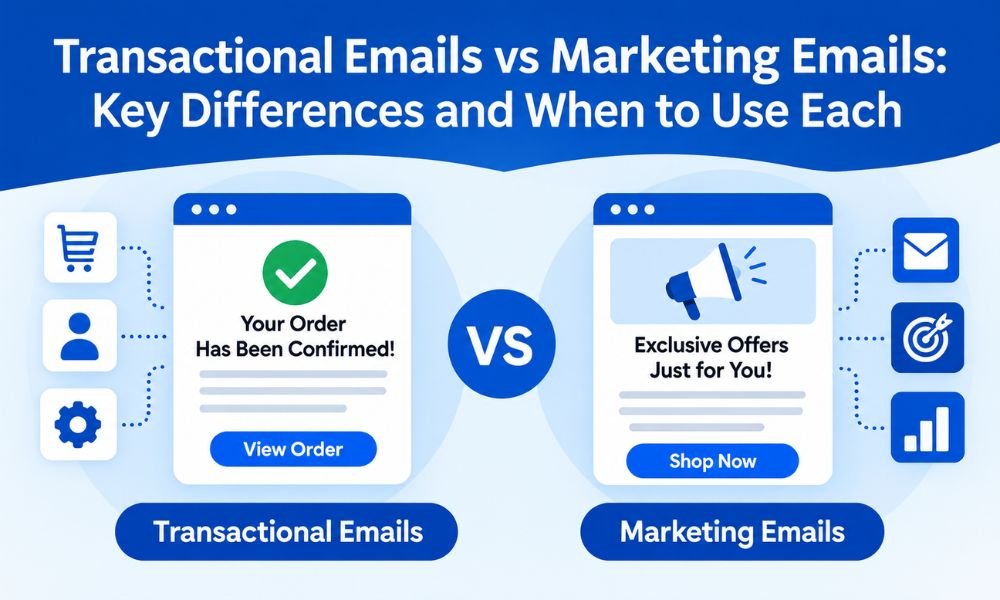
Email is one of the most important communication channels for modern businesses, but not every email serves the same purpose. A password reset message, order confirmation, promotional newsletter, and abandoned-cart reminder may all arrive in the same inbox, yet they can have very different sending requirements and compliance considerations.
The two major categories are transactional emails and marketing emails. Understanding the difference helps businesses choose the right sending infrastructure, improve deliverability, communicate with customers appropriately, and avoid treating promotional messages like essential service notifications.
What Are Transactional Emails?
Transactional emails are automated messages triggered by a specific action, event, or request involving a customer or user. Their primary purpose is to provide information that the recipient expects or needs as part of an interaction with a business.
Common examples include:
- Order confirmations
- Shipping and delivery notifications
- Password-reset emails
- Account-verification messages
- Login or security alerts
- Payment receipts
- Invoice notifications
- Appointment confirmations
- Subscription confirmations
- Welcome messages triggered by account registration
For example, when a customer purchases a product online, the order confirmation email is transactional because it communicates information directly related to that transaction.
Transactional emails are generally sent automatically through an SMTP service or email API integrated with an application, website, e-commerce platform, or customer-management system. Because these messages can contain important account or transaction information, reliable delivery is particularly important.
What Are Marketing Emails?
Marketing emails are primarily designed to promote products, services, content, offers, or a brand. Unlike transactional emails, their main purpose is generally engagement, lead nurturing, customer retention, or sales.
Typical marketing emails include:
- Promotional offers
- Product announcements
- Newsletters
- Seasonal campaigns
- Discount campaigns
- Product recommendations
- Lead-nurturing sequences
- Event invitations
- Educational email campaigns
- Re-engagement campaigns
For instance, an online store sending customers a “20% off this weekend” promotion is sending a marketing email.
Marketing emails usually depend on customer consent, appropriate subscription practices, and clear unsubscribe mechanisms. Businesses should also consider applicable privacy, anti-spam, and electronic communications requirements in the countries where their recipients are located.
Transactional vs Marketing Emails: Key Differences
Although both types use email infrastructure to reach customers, their purposes and sending characteristics are different.
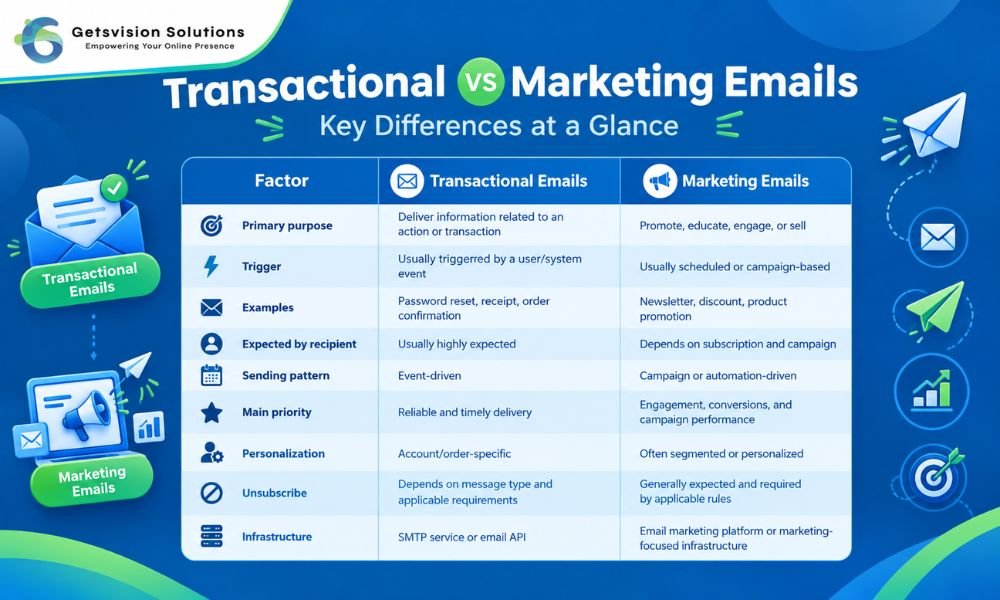
The distinction is important because combining both email types without proper infrastructure or segmentation can create operational and deliverability problems.
When Should You Use Transactional Emails?
Use transactional email when a message is directly connected to a customer’s action, account, or requested service.
1. Confirming a purchase
After a customer places an order, an automated confirmation provides essential details such as the order number, products, amount, and payment status.
2. Sending account and security notifications
Password resets, email verification, login alerts, and other security-related communications are classic transactional messages.
3. Providing billing information
Invoices, payment receipts, subscription confirmations, and payment-status notifications can be delivered automatically after relevant events occur.
4. Updating customers about fulfillment
Shipping confirmations, delivery updates, and order-status notifications help customers understand what is happening after a purchase.
For businesses sending large volumes of these messages, choosing suitable infrastructure is important. Our guide to the 10 best transactional email services provides additional context when evaluating providers.
When Should You Use Marketing Emails?
Marketing emails are appropriate when the goal is to build relationships, generate demand, increase sales, or keep subscribers informed.
1. Promoting products or services
Businesses can use promotional campaigns to introduce products, communicate special offers, or encourage existing customers to make another purchase.
2. Building an email newsletter
Newsletters can provide educational content, company updates, industry insights, or curated resources to subscribers.
3. Nurturing leads
A sequence of relevant emails can help prospects understand a product, compare solutions, and move through the buying journey.
4. Re-engaging customers
If subscribers have stopped interacting with your emails, a carefully designed re-engagement campaign can encourage them to return.
Marketing emails should be sent to appropriate audiences and should provide a clear way for recipients to manage their subscriptions or opt out where required.
Can One Email Be Both Transactional and Marketing?
This is where businesses need to be particularly careful.
An email can contain both essential transactional information and promotional content. For example, an order-confirmation email might include the order details followed by recommendations for other products.
However, businesses should not assume that adding a small amount of promotional content automatically makes a message transactional—or that calling an email a “transactional email” determines its legal or technical classification.
The primary purpose, content, recipient expectations, applicable laws, and regulatory requirements can all matter. If an email contains significant promotional content, businesses should evaluate whether it should instead be treated as a marketing communication.
Keeping transactional and promotional messaging clearly separated is often a simpler approach for managing compliance, customer expectations, analytics, and deliverability.
Why Email Deliverability Matters for Both
Regardless of email type, successful sending depends on more than simply pressing “send.”
Authentication mechanisms such as SPF, DKIM, and DMARC help establish that messages are authorized and can improve trust in your sending domain. Businesses should also monitor bounce rates, spam complaints, engagement signals, domain reputation, and sending patterns.
Transactional messages require especially careful monitoring because customers may depend on receiving them quickly. Marketing campaigns also need strong deliverability because poor inbox placement can reduce opens, clicks, and conversions.
Businesses using SMTP infrastructure should therefore select providers based on factors such as sending volume, API availability, authentication support, analytics, scalability, reputation management, and technical support—not simply the advertised price.
Best Practices for Managing Both Email Types
A practical email strategy should separate transactional and marketing communications whenever possible.
Use dedicated sending streams: Separating transactional and promotional traffic can make monitoring and reputation management easier.
Authenticate your domain: Configure SPF, DKIM, and DMARC correctly for your sending domains.
Monitor deliverability: Track bounces, complaints, delivery rates, and other relevant sending metrics.
Segment recipients: Send marketing campaigns based on relevant subscriber characteristics, preferences, or engagement.
Keep transactional emails focused: Essential notifications should clearly communicate the information the recipient needs.
Respect consent and unsubscribe requirements: Follow applicable laws and platform requirements for promotional communications.
Choose infrastructure based on volume: A small website may have different requirements from an e-commerce store, SaaS platform, or organization sending millions of messages.
Which One Should Your Business Use?
Most businesses should use both transactional and marketing emails because they serve different purposes.
Transactional emails support the customer experience by communicating information associated with accounts, purchases, payments, security, and other user-initiated events. Marketing emails support growth by helping businesses educate audiences, promote products, nurture leads, and maintain customer relationships.
The key is not choosing one over the other. Instead, businesses should classify messages correctly, use appropriate sending infrastructure, authenticate their domains, monitor deliverability, and follow applicable communication requirements.
When these practices are combined with relevant content and responsible email frequency, businesses can build an email program that supports both reliable customer communication and sustainable marketing growth.