For an e-commerce business, getting visitors to your website is only half the challenge. The bigger opportunity is turning those visitors into engaged customers who return, purchase, and recommend your brand. Email remains one of the most effective channels for doing this because it gives businesses a direct way to communicate with people who have already shown interest in their products or services.
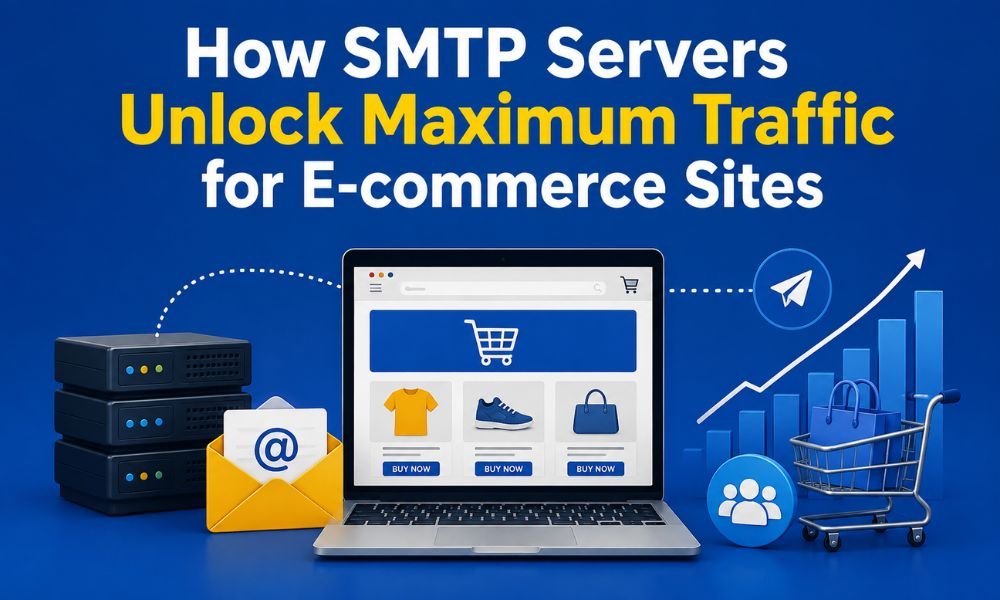
Behind reliable e-commerce email communication is an often-overlooked technology: the SMTP server. SMTP, or Simple Mail Transfer Protocol, is responsible for transferring outgoing emails from a sender to the recipient’s mail server. For online stores, a properly configured SMTP infrastructure can support transactional emails, promotional campaigns, abandoned-cart reminders, product recommendations, and customer engagement.
The important point is that an SMTP server does not directly create website traffic. Instead, it helps businesses reliably deliver the emails and campaigns that can generate qualified visits, repeat purchases, and customer engagement.
What Is an SMTP Server?
An SMTP server is a mail server that handles the sending and delivery process for outgoing email. Whenever an e-commerce website sends an order confirmation, shipping notification, promotional message, or password-reset email, SMTP infrastructure can be involved in delivering that message.
For growing online stores, using dependable SMTP infrastructure is particularly important because email volume can increase rapidly. A website may need to send thousands or even millions of messages while maintaining authentication, delivery performance, reputation, and operational reliability.
This makes SMTP an important part of an e-commerce communication strategy—not simply a technical component.
1. Improve the Delivery of Transactional Emails
Transactional emails are among the most important messages an online store sends.
Examples include:
- Order confirmations
- Payment receipts
- Shipping notifications
- Delivery updates
- Account verification emails
- Password-reset messages
- Return and refund notifications
Customers expect these emails to arrive quickly. A delayed order confirmation can create unnecessary support requests, while a missing shipping notification can reduce customer confidence.
A reliable SMTP setup helps e-commerce businesses establish a consistent email delivery process. When customers receive important notifications promptly, they are more likely to trust the store and return for future purchases.
2. Recover Abandoned Shopping Carts
Cart abandonment is a major challenge for online retailers. A customer may add products to a cart but leave the website before completing checkout.
An automated abandoned-cart email can remind the customer about the products they considered and provide a direct path back to the checkout page.
For example, an e-commerce store could send:
“You left something behind”
followed by product information and a clear Return to Cart button.
The email itself becomes a traffic source. Instead of relying on the customer to remember the website, the business gives them a convenient link that takes them directly back to the shopping journey.
3. Drive Targeted Traffic Through Promotional Campaigns
SMTP infrastructure can support promotional email campaigns that direct subscribers to specific products, categories, offers, or landing pages.
However, simply sending more emails does not necessarily mean more traffic. Effective e-commerce email marketing depends on relevance, timing, segmentation, and deliverability.
For example, instead of sending the same promotion to an entire database, an online retailer could segment customers based on:
- Previous purchases
- Browsing behavior
- Product interests
- Location
- Customer lifecycle stage
- Purchase frequency
- Engagement history
A customer who previously purchased running shoes might receive a campaign about new running accessories rather than an unrelated electronics promotion.
This type of targeted communication can generate more qualified website visits than indiscriminate mass emailing.
4. Increase Repeat Purchases
The first purchase should not be the end of the customer relationship.
E-commerce brands can use email to encourage repeat purchases through product recommendations, replenishment reminders, loyalty offers, and personalized promotions.
For instance, if a customer regularly purchases a consumable product, the business can send a reminder around the expected repurchase period.
Similarly, recommendation emails can introduce complementary products:
“You purchased a laptop. Here are five accessories customers commonly buy with it.”
The objective is not simply to increase email volume. It is to create useful reasons for customers to revisit the website.
5. Support Better Customer Experience
Customer experience directly influences whether people return to an online store.
A well-planned email communication strategy can keep customers informed throughout the purchasing journey. From confirmation to delivery, customers should know what is happening with their orders.
SMTP infrastructure supports this communication by helping businesses send important messages consistently.
When customers receive accurate and timely updates, they may have fewer reasons to contact support and more confidence in the business.
6. Protect Email Deliverability and Sender Reputation
Generating traffic from email is only possible when emails actually reach recipients.
This is why e-commerce businesses need to pay close attention to email deliverability.
Technical configuration alone is not enough. Businesses should also maintain clean mailing lists, control bounce rates, authenticate their sending domains, monitor engagement, and avoid sending unwanted messages.
Modern email authentication practices such as SPF, DKIM, and DMARC can help establish sender legitimacy. Businesses should also monitor their sending reputation and investigate unusual increases in bounces, spam complaints, or delivery failures.
If you’re evaluating the technical side of email infrastructure, understanding SMTP ports and the differences between ports 25, 465, and 587 can help you make better configuration decisions.
7. Make Product Launches More Effective
Product launches are another area where SMTP-supported email campaigns can generate traffic.
Suppose an e-commerce company introduces a new product. Rather than waiting for customers to discover it organically, the business can notify relevant subscribers with:
- Product benefits
- Images
- Introductory offers
- Customer reviews
- Frequently asked questions
- A direct product-page link
The email becomes a bridge between the subscriber’s inbox and the company’s website.
For maximum effectiveness, the landing page should match the message in the email. If an email promotes a particular product, clicking the CTA should take users directly to that product rather than a generic homepage.
8. Turn Customer Engagement Into Website Visits
Email traffic is particularly valuable because subscribers have already demonstrated some level of interest in the brand.
A business can use newsletters and educational content to bring subscribers back to its website regularly.
For example, an online fashion retailer could send:
“5 Ways to Style Your Summer Wardrobe”
and link each recommendation to relevant product pages.
A technology retailer could publish:
“How to Choose the Right Laptop for Remote Work”
with links to suitable products.
This approach combines useful content with commercial opportunities and can create repeat traffic without relying exclusively on paid advertising.
9. Measure Traffic and Campaign Performance
A professional e-commerce email strategy should be measurable.
Businesses should monitor metrics such as:
- Delivery rate
- Bounce rate
- Open rate
- Click-through rate
- Conversion rate
- Unsubscribe rate
- Spam complaint rate
- Revenue generated per campaign
- Website sessions from email
- Repeat purchases
Tracking these metrics helps marketers identify what is working and what needs improvement.
For example, a campaign may have a strong open rate but a poor click-through rate. That could indicate that the subject line is effective while the email content or CTA needs improvement.
Likewise, a high click-through rate combined with low sales could indicate a problem with the landing page, pricing, checkout process, or overall customer experience.
10. Choose SMTP Infrastructure That Can Scale
An SMTP solution that works for a small online store may not be suitable when email volume increases.
Before selecting an SMTP provider, e-commerce businesses should consider:
- Sending capacity
- Deliverability features
- Dedicated or shared infrastructure
- Authentication support
- Bounce handling
- Analytics and reporting
- IP reputation management
- Scalability
- Technical support
- Integration with the existing e-commerce platform
Businesses sending significant volumes should also understand how dedicated infrastructure differs from shared solutions. A dedicated SMTP environment can provide greater control, but it may require more technical management and reputation monitoring.
For additional guidance, businesses can review this guide to choosing the right SMTP server for bulk email campaigns.
SMTP Alone Does Not Guarantee More Traffic
It is important to avoid a common misconception: an SMTP server does not automatically increase website traffic.
SMTP is the delivery infrastructure. The traffic comes from what businesses do with that infrastructure.
A successful e-commerce strategy combines reliable email delivery with:
- Relevant content
- Audience segmentation
- Strong calls to action
- Personalized offers
- Useful landing pages
- Consistent testing
- Proper email authentication
- Clean subscriber data
- Responsible sending practices
- Performance measurement
When these elements work together, email can become a dependable source of qualified traffic and revenue.
Final Thoughts
SMTP servers play an important behind-the-scenes role in e-commerce communication. From order confirmations and delivery updates to abandoned-cart reminders, promotional campaigns, and personalized recommendations, reliable email infrastructure helps online businesses maintain consistent communication with their customers.
However, maximum traffic does not come from sending the largest possible number of emails. It comes from delivering the right message to the right customer at the right time.
For e-commerce brands, the best approach is to treat SMTP as the foundation of a broader email marketing system. Combine dependable infrastructure with strong deliverability practices, audience segmentation, valuable content, compelling CTAs, and optimized landing pages.
When implemented responsibly, this approach can help an online store bring customers back to its website, strengthen relationships, increase repeat purchases, and turn email communication into a sustainable source of qualified traffic.